Redi‑Rock: A Game‑Changing Large Block Solution for Retaining Wall Design

Now available locally, this proven large block retaining wall system is designed to make your projects faster, stronger, and smarter.

Explore Wall Feasibility

Why Consider Redi-Rock?

image of person installing redi-rock block

Efficient Installation

Massive blocks install with just one small crew and minimal heavy machinery, with no complex formwork or curing time. This results in faster installation with less labor.
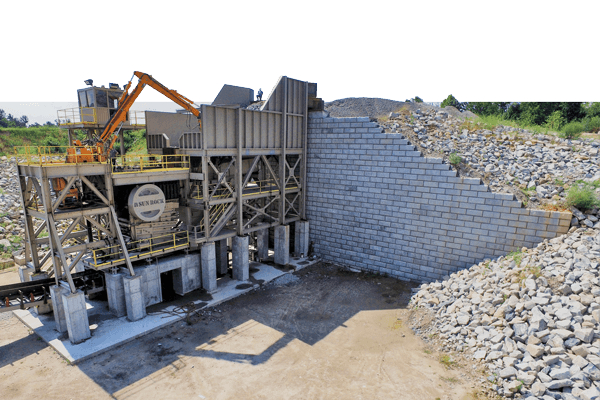
image of tall pc redi-rock wall for quarry

Durable Design

Wet-cast, segmental walls resist settlement, freeze‑thaw, and drainage issues—unlike poured walls. Large blocks interlock, resulting in extremely durable walls.
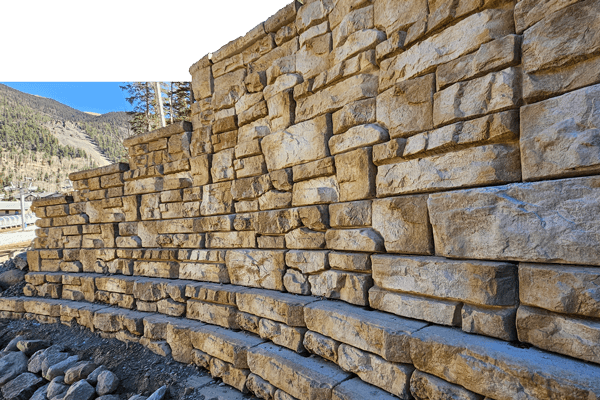
image of redi-rock ledgestone textured wall

Aesthetic Appeal

Natural stone textures, corners, and curves make Redi-Rock walls beautiful, functional, and graffiti-resistant. Whether you need a gravity wall, mechanically stabilized earth (MSE) wall, Redi-Rock has you covered.

See What Your Can Create With Redi-Rock Large Blocks


quotation

Redi Rock is a fantastic choice for just about any retaining wall project. Multiple textures satisfy most tastes, solid engineering behind the project, thorough documentation, and great customer support.

Factor Geotechnical Ltd

Find the Right Redi-Rock Wall Solution For You

Your choice determines if wall height is measured in feet or meters.
Total wall height including buried section. Enter your wall height in increments of 1.5 feet (0.46 meters). If you enter a wall height that is not in increments of 1.5 feet (0.46 meters), your wall height will automatically update to the closest possible wall height. Contact our Engineering Department at 866-222-8400 about walls over 21 feet (6.4 meters).
Why Does Soil Type Matter in Retaining Wall Design?
Select between four general soil types based on assumed internal angles of friction—each type exerts different pressure on the wall. Soils like sand and gravel (with higher friction angles) offer better performance than weaker soils like silt or clay. Because internal soil strength has a major impact on wall stability and analysis, care must be taken in this step. A trained professional should always evaluate and confirm soil conditions for accurate design. Watch this video to learn more.
Select flat areas, traffic loads, or slopes on the top of the wall. Note that sections with a slope at the bottom, or toe, of the wall are not shown here. A toe slope condition needs to be carefully analyzed based on detailed site conditions.

Still not finding what you are looking for? Call a Redi-Rock engineer at 866-222-8400.