Engineering FAQs: Material Choices and Backfill Guidance
Avg. Read Time: 2 mins, 5 sec
Smart material choices are key to wall performance. These material-focused FAQs guide engineers in designing retaining wall solutions using Redi-Rock’s integrated retaining wall systems.
The Base Course
Short on time? Here are this article’s key takeaways…
Get answers to three key questions: Is drainage required in a completed wall? Is recycled concrete aggregate (RCA) acceptable backfill material? Are expansion joints needed for Redi-Rock retaining walls?
Smart material selection matters. Choosing the right types of backfill and drainage materials directly impacts the strength and performance of a retaining wall project.
Explore trusted engineering resources, from design manuals and spec sheets to software tools and webinars, to support accurate Redi-Rock wall design.
Frequently Asked Questions
Q: Is drainage required behind a Redi-Rock wall? A: A minimum of 12 in (300 mm) of high-quality, clean, crushed stone should be placed behind the Redi-Rock blocks to effectively manage water around the retained soil. The total amount of stone placed behind a wall will be based on site and soil conditions and is not limited to 12 in (300 mm). ASTM No. 57 stone is an accepted industry standard for clean crushed drainage stone. Additionally, a perforated drain pipe should be installed at the base of the drainage zone, with outlets provided at regular intervals to ensure proper water management.
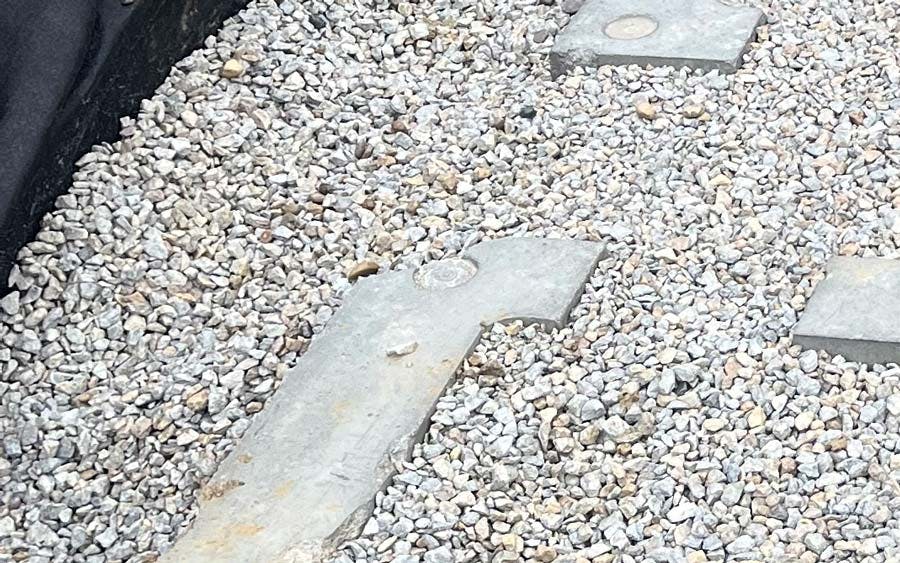
Q: Is recycled concrete aggregate (RCA) an acceptable backfill material for Redi-Rock walls? A: Recycled concrete aggregate (RCA) can be considered a backfill material in some applications, but there are important limitations to keep in mind—especially for mechanically stabilized earth (MSE) walls that include geogrid reinforcement.
One of the primary concerns with using RCA in reinforced wall applications is how it interacts with the geogrid. RCA is typically angular, which can affect the performance of the soil-grid interface. Additionally, RCA may have a chemical composition that falls outside the limits specified for reinforced backfill. These factors can compromise the long-term durability and effectiveness of the reinforcement system and should be carefully evaluated before selecting RCA for use behind an MSE wall. Efflorescence is another consideration, though generally aesthetic rather than structural. In applications where water infiltrates the RCA, salts within the recycled material can be carried through the wall and deposited on the face as a white, powdery residue. While this doesn't impact the wall’s integrity, it can affect appearance and client satisfaction.
Given these potential issues, reviewing material properties and design specifications carefully when considering RCA as backfill—especially in reinforced wall applications is essential.
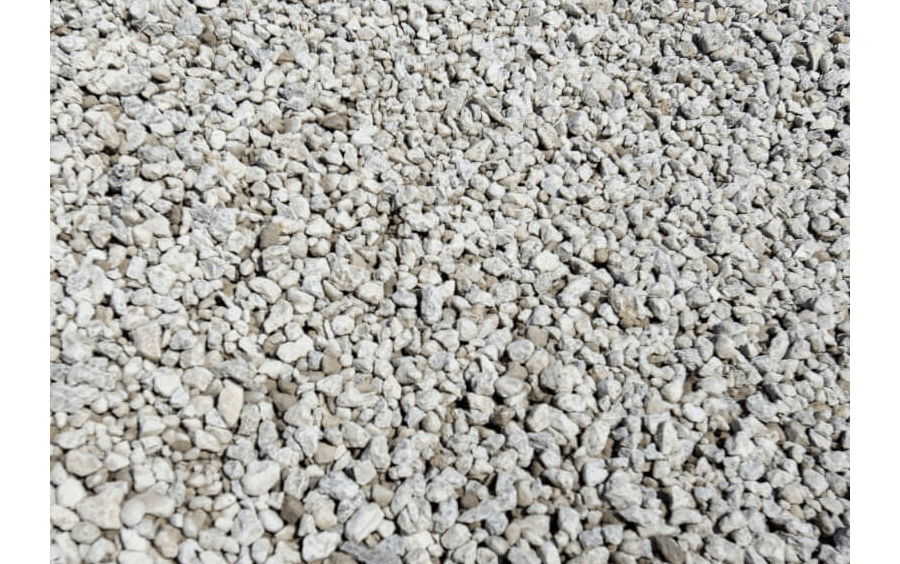 Image from State Material Mason Supply
Q: Do Redi-Rock walls require expansion joints? A: Thanks to the flexibility of Redi-Rock’s modular block system, expansion joints are not typically required within the wall itself. The only exceptions are where the wall interfaces with rigid structures, such as box culverts, headwalls, or pipe penetrations, where differential movement could cause stress. In those cases, expansion joints should be included to allow the Redi-Rock wall to move independently from these fixed elements.
Retaining Wall Engineering Resources
Designing high-performing retaining walls goes beyond selecting the right materials - it’s about having the right tools at your fingertips. These trusted retaining wall design and engineering resources make it easier to specify Redi-Rock systems accurately and confidently.
- Preliminary Wall Sections
- Redi-Rock Wall + Wall Design Software
- SketchUp files
- Design Resource Manual
- Block Library
- Construction Details
- Specifications & Product Data
- Block & Application Test Reports
- Technical Resources for Barrier Walls
- Precast Modular Block Design Manual, Vol. 1 - Gravity Walls
- Engineering webinars and supplementary articles